Hi, Kailey here. Based off of the title of my English 212, “Writing with Maps, Lines and Numbers,” class I’m assuming that I will make connections from my everyday life to this specific class through watching movies, things I learn in my current 204 English class, as well as new terms and styles of writing that I can use on a daily basis. I hope that blogging my thoughts and ideas makes it easier to keep track of my responsibilities. I also hope to gain a better understanding on why people like to blog in the first place and learn more about its purpose.
A concept from AdlerKasner and Wardle’s text, “Threshold Concepts of Writing,” that I found interesting is that “Writing Expresses and Shares Meaning to be Reconstructed by the Reader.” In my opinion, this concept is about expression. Writers use personal experience in their writing to put forth a message that’s meaningful. This allows the reader to relate easier. I found in the text that they also mention writing being tricky sometimes because writers are not always 100% sure that what they write is going to appeal to the person who is reading it. Not a single person will have the same thoughts and opinions on a single piece of writing.
In my opinion this threshold concept of writing and text can relate to a map very well. (See attached picture) Why a map? Well maps are well thought out and are used to put forth a clear message to readers. If a map is not drawn to scale or the data on it is incorrect, it can really mess with how the reader translates the map itself. Although some writers can warp the truth and make it seem logical and like it makes sense to the eye, even if it’s not the entire truth. Maps can help people with directions and research. It can complicate things if what is pictured is incorrect or hard to read for many obvious reasons.
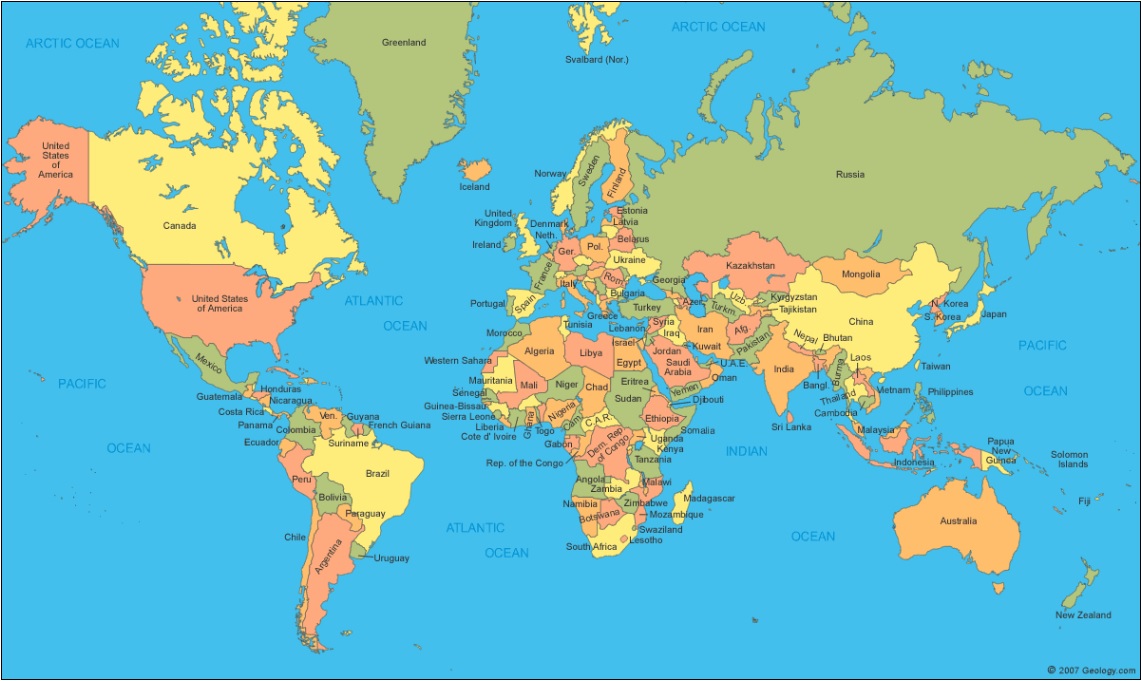
The rhetorical appeal ethos stems from the person who creates the map. The ethics and beliefs of authors all around can vary greatly. They have the power to manipulate the content that they’re creating. This could possibly lead their readers to believe certain things. But the direction of their manipulation depends on the their ethics and how they view it. The rhetorical appeal, pathos can also apply to this situation. Those who are reading the map, can represent one thing but can also be viewed in a totally different way. That’s just like what happened in the “West Wing” video clip and the article “How map projections warp your understanding of geometry.” Even though the maps/pictures were the same, the people looking at them were viewing them from 2 different perspectives.
I chose my own map to talk about. This map reflects the threshold concept that I selected because of the many ways it could be perceived by others. The creator of this map has reasons as to why they used the sizes, colors, data, and information for this particular map. The creator of this map is clearly trying to use these traits to represent the varying sizes of the continents. But I also noticed that not one color is touching its own kind. In my opinion, the creator of this map did this to make it easier for their viewers to read. In conclusion, writers do everything they create and write for a reason and that is very much proven in the map that I chose.

 Kailey's Blog